Project Type
Product Design
Role
Sr. Product Designer
Skills
Figma, Prototyping, UX/UI
Standardizing Vehicle Condition Communication: Bridging Physical and Digital Auction Experiences
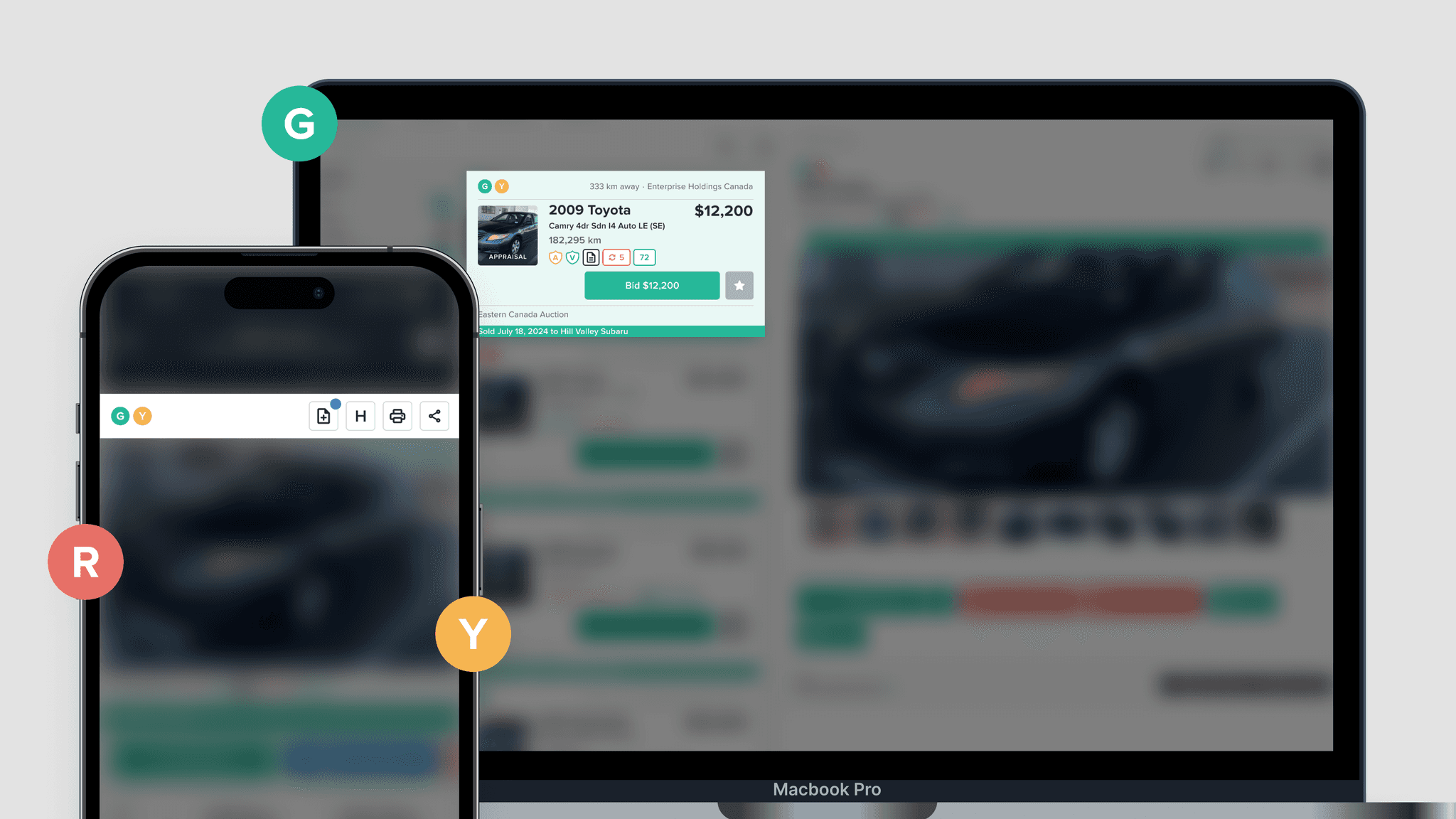
Project Overview
EBlock expanded from digital-only auctions to supporting physical auctions in digital lanes. This transition revealed a critical communication gap: our proprietary condition system conflicted with industry-standard sale lights, creating confusion for buyers operating across both environments.
The Problem
EBlock's expansion into physical auctions exposed a fundamental mismatch in condition communication:
Industry Context
Physical auto auctions universally use color-coded sale lights (Green=Good, Yellow=Caution, Red=Issues) as the standard communication method with decades of established meaning.
Our System
EBlock used proprietary vehicle scores and text declarations that had no correlation to sale light meanings.
The Conflict
When auction partners ran simultaneous physical and digital auctions, buyers encountered different condition signals for identical vehicles, creating cognitive load and potential mistrust in our platform's accuracy.
Project Constraints
This project operated under typical resource limitations:
No budget for user research due to fast expansion timeline
Legacy system integration requiring backward compatibility
Partner requirements demanding quick implementation to support physical auction launches
Given these constraints, I focused on industry research and established auction standards rather than custom user studies.
Strategic Approach
Industry Standards Research
I conducted comprehensive research into automotive auction industry practices, analyzing sale light systems across major auction houses (Manheim, ADESA) and documenting standard color meanings and hierarchy.
Design Principles
Industry Alignment
Leverage established mental models rather than forcing users to learn new systems
Additive Integration
Enhance rather than replace existing EBlock features that provided unique value
Progressive Disclosure
Present information hierarchy that prioritizes critical condition data
Design Solution
Sale Light Integration
Implemented industry-standard color-coded sale lights as primary condition indicators, with custom additions like "Assurance" (premium verified) and "As-Is" (no warranty) to align with EBlock's service offerings.
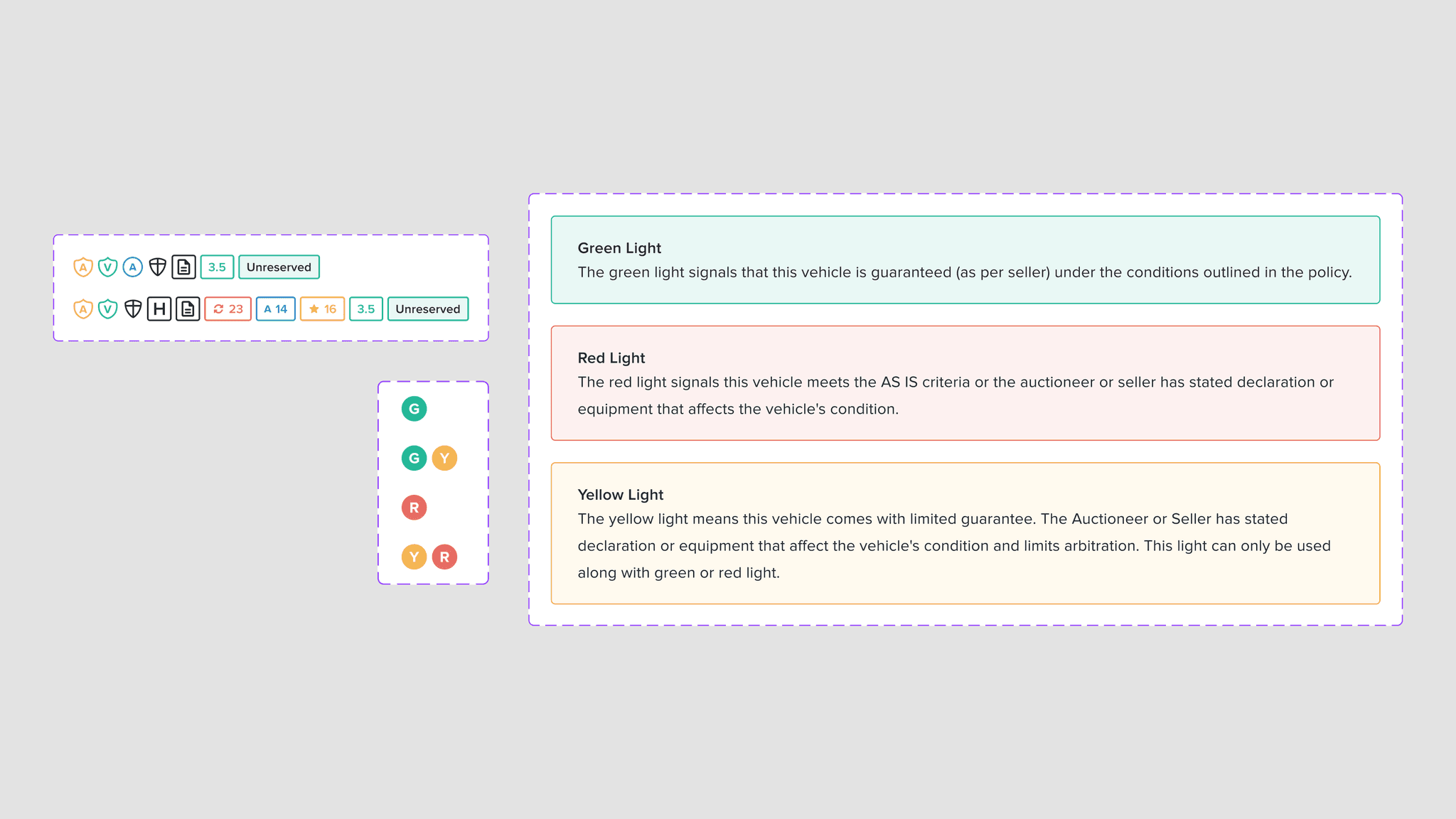
Parameters & logic of the sale lights + badge group.
Information Architecture Redesign
Established clear information hierarchy:
Sale lights (immediate condition assessment)
EBlock badges (value-added services like "Verified" or "Assurance")
Detailed scores (for users wanting deeper analysis)
Component System Updates
Updated 12+ components across the platform:
Vehicle cards: Prominent sale light placement with supporting badge information
Vehicle Detail Pages: Sticky header ensuring condition visibility during scrolling
Auction interfaces: Consistent placement across timed and live auction formats
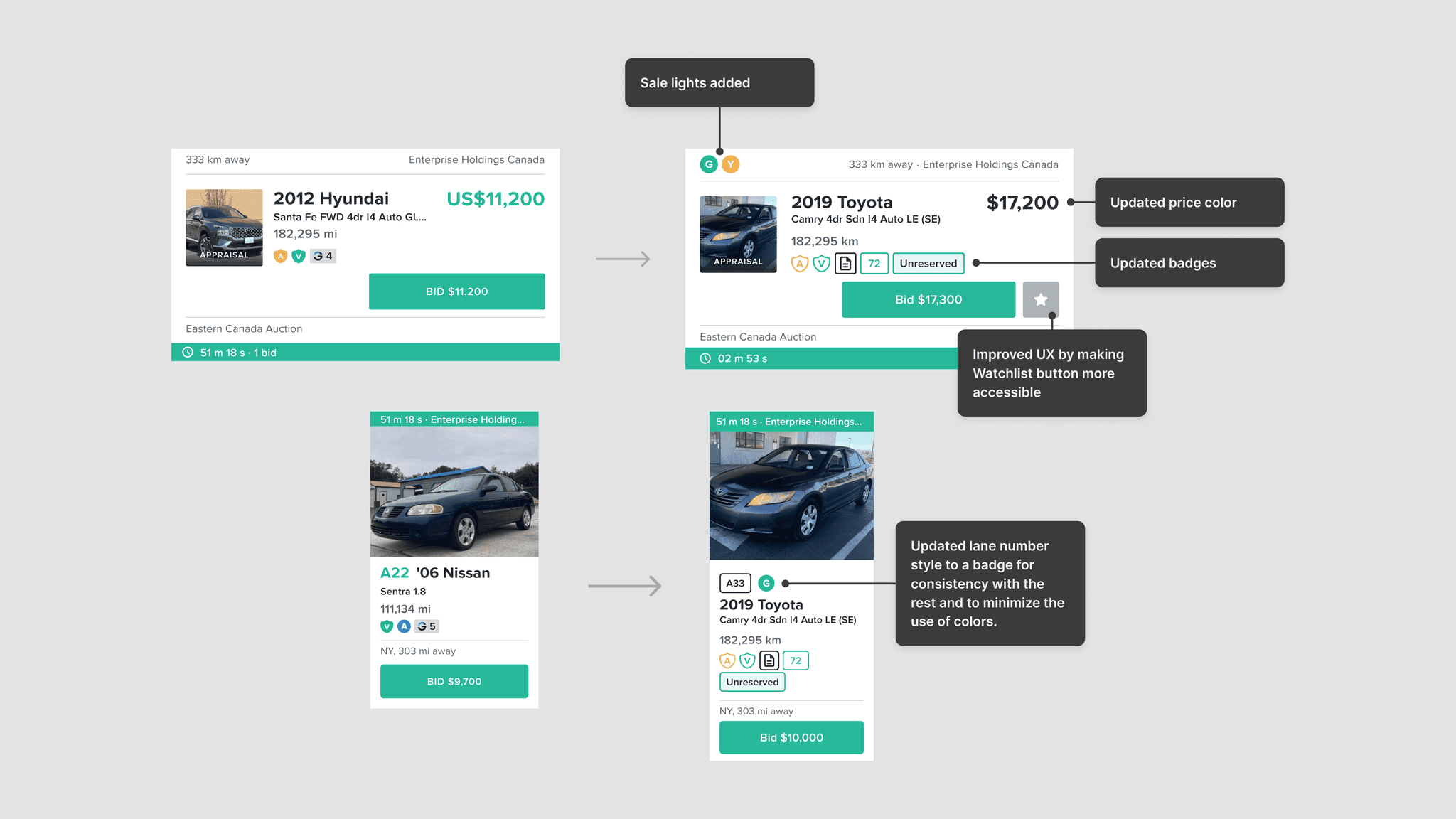
Before-and-after examples of the redesign in the auction card components.
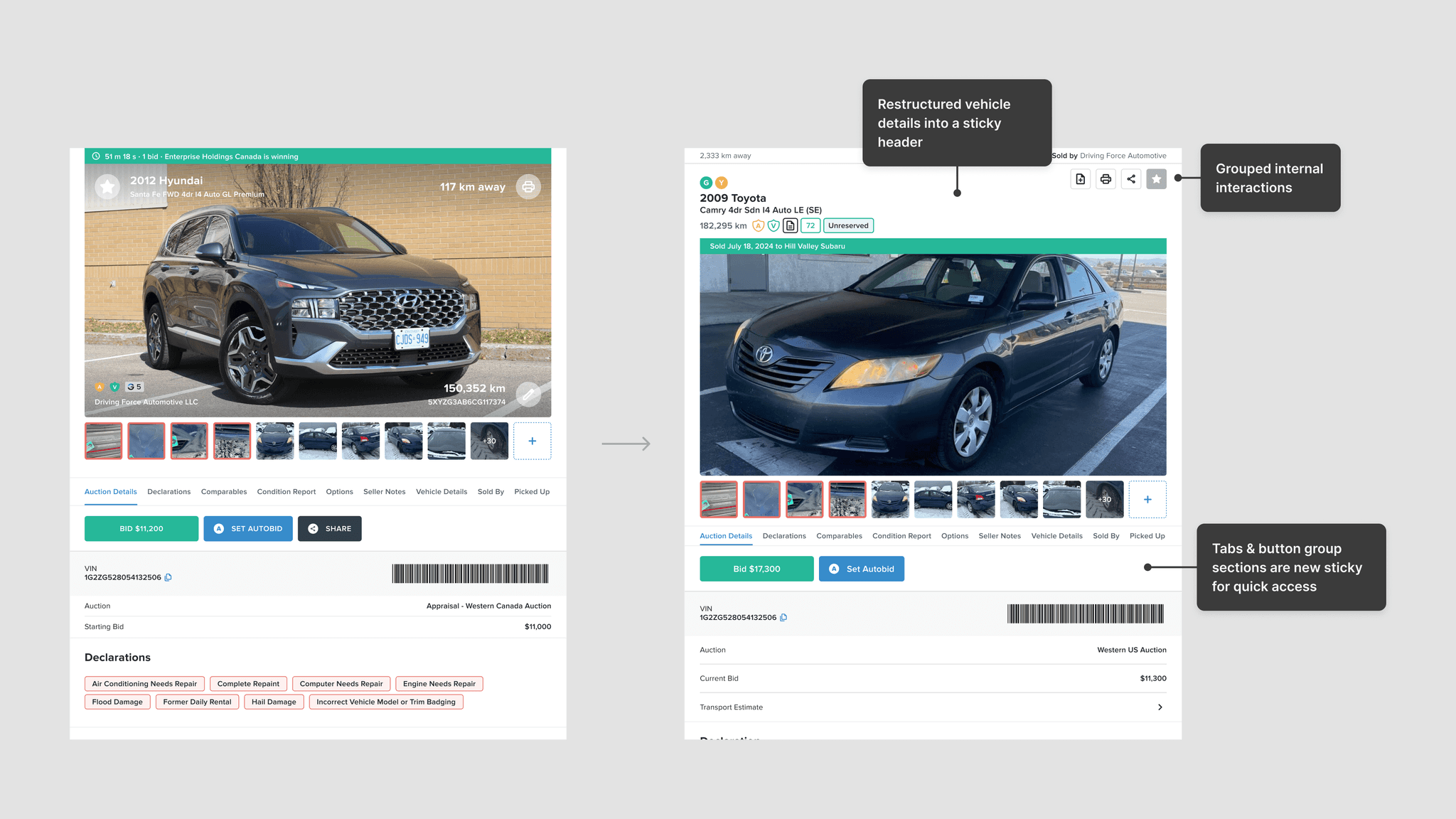
Before-and-after examples of the redesign in the vehicle detail page.
Visual Hierarchy Refinement
Badge Redesign
Converted filled badges to outlined style to reduce visual competition with sale lights while maintaining brand recognition for premium services.
Consistent Placement
Established standardized positioning pattern ensuring sale lights appear in the same location across all contexts.
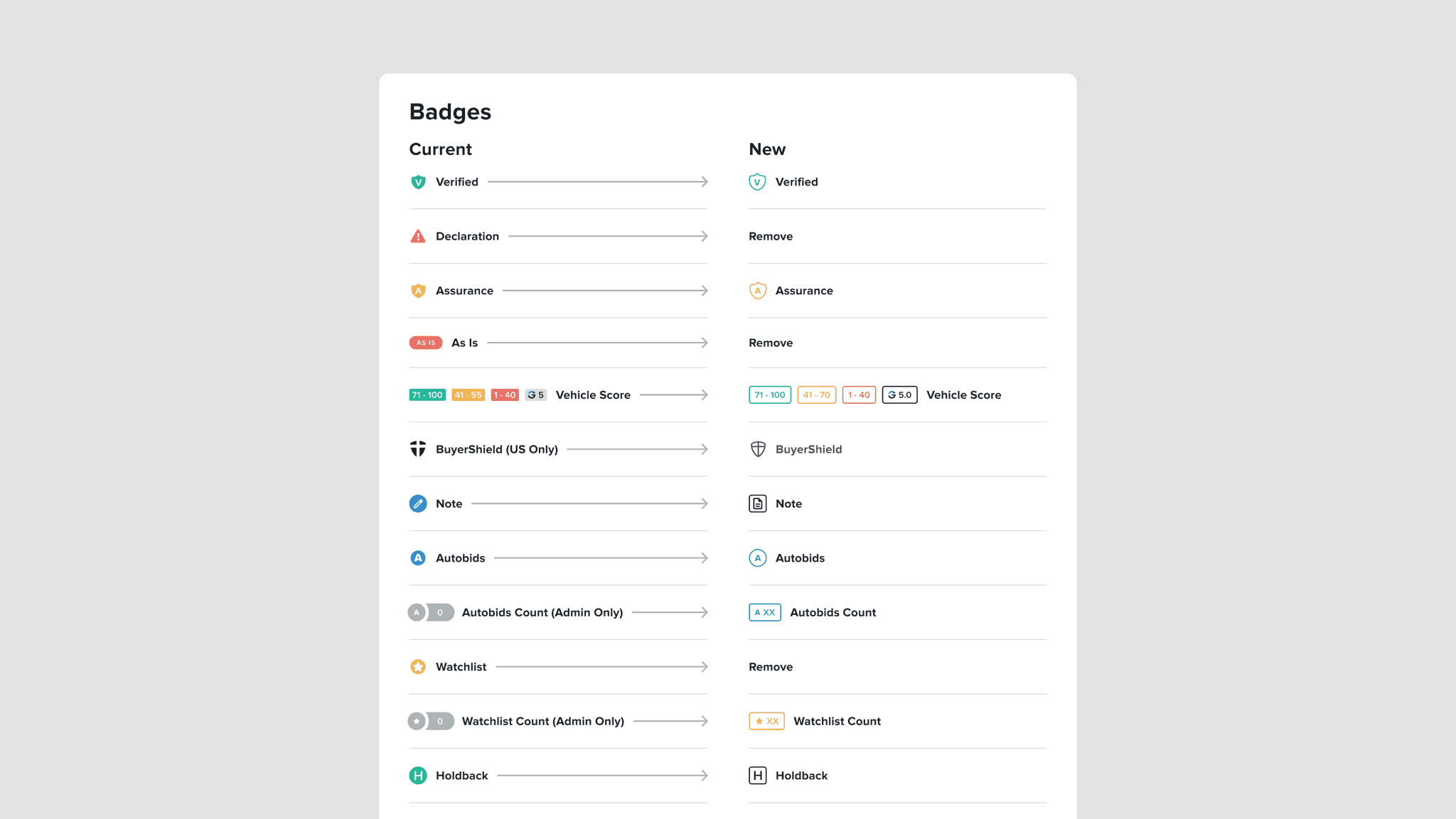
List of badges that were removed and had a UI redesign.
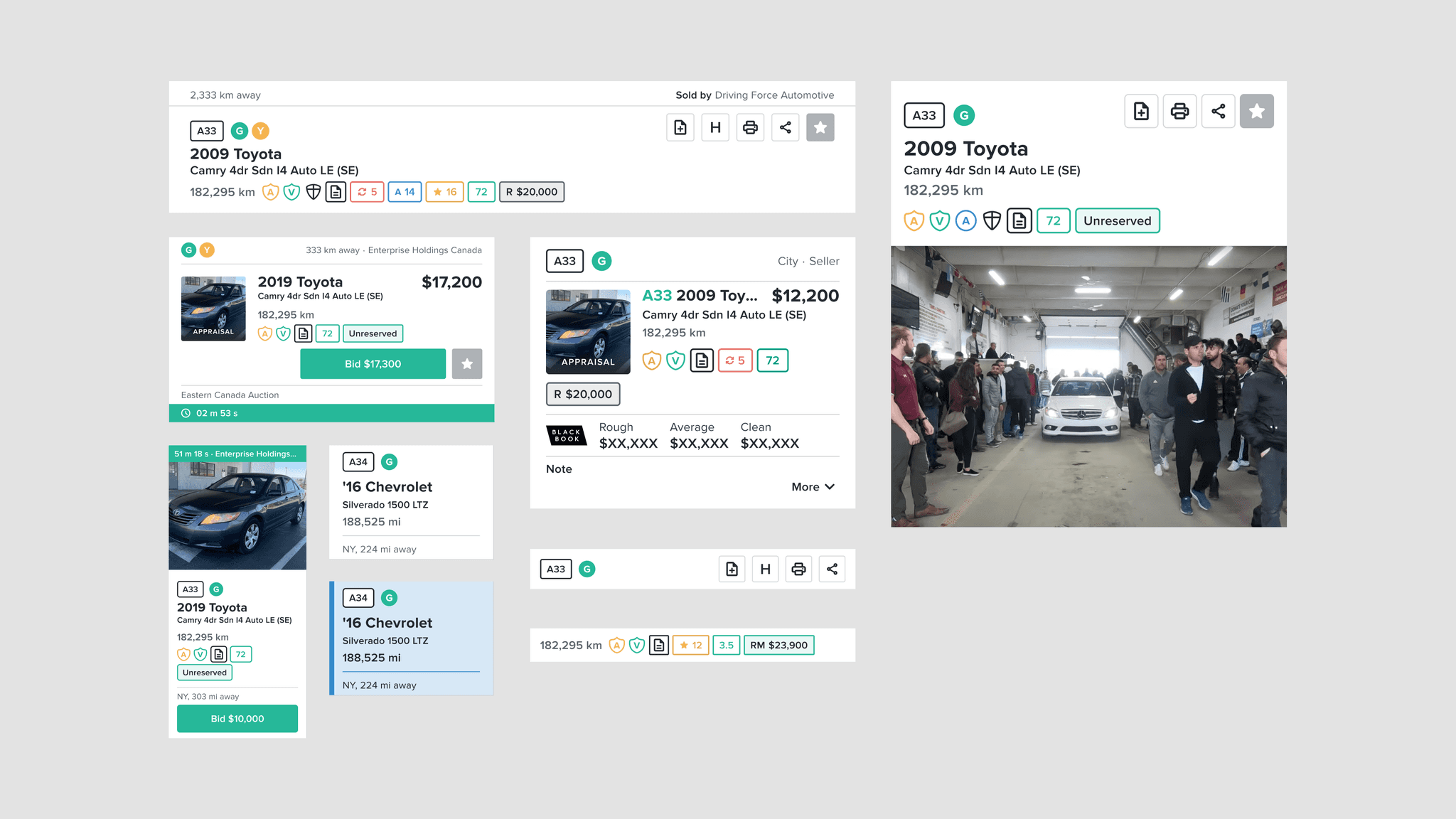
Examples of the standardized positioning pattern of the sale lights.
Implementation Strategy
Backward Compatibility
Maintained existing vehicle scoring system alongside new sale lights to support users during transition and internal processes.
Progressive Rollout
Implemented across core components first, then auction interfaces, followed by mobile optimization.
Results
100% integration across all vehicle-related components
Seamless partner onboarding for physical auction integration
Reduced confusion reports from customer support
Consistent implementation using established design system principles
Faster development leveraging existing component architecture
Hi-Fidelity Wireframes
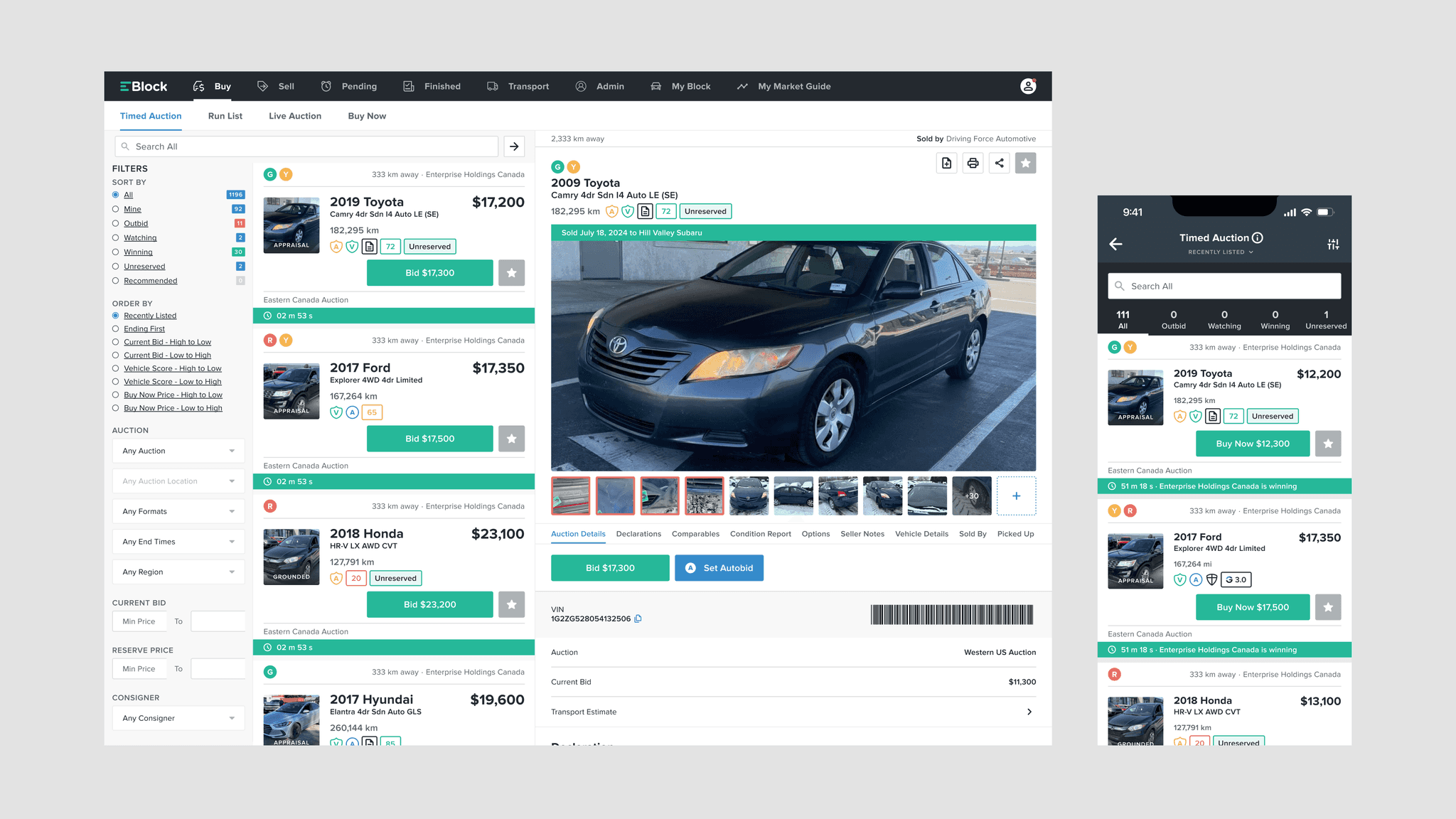
Example of our Timed Auction template for web and mobile.
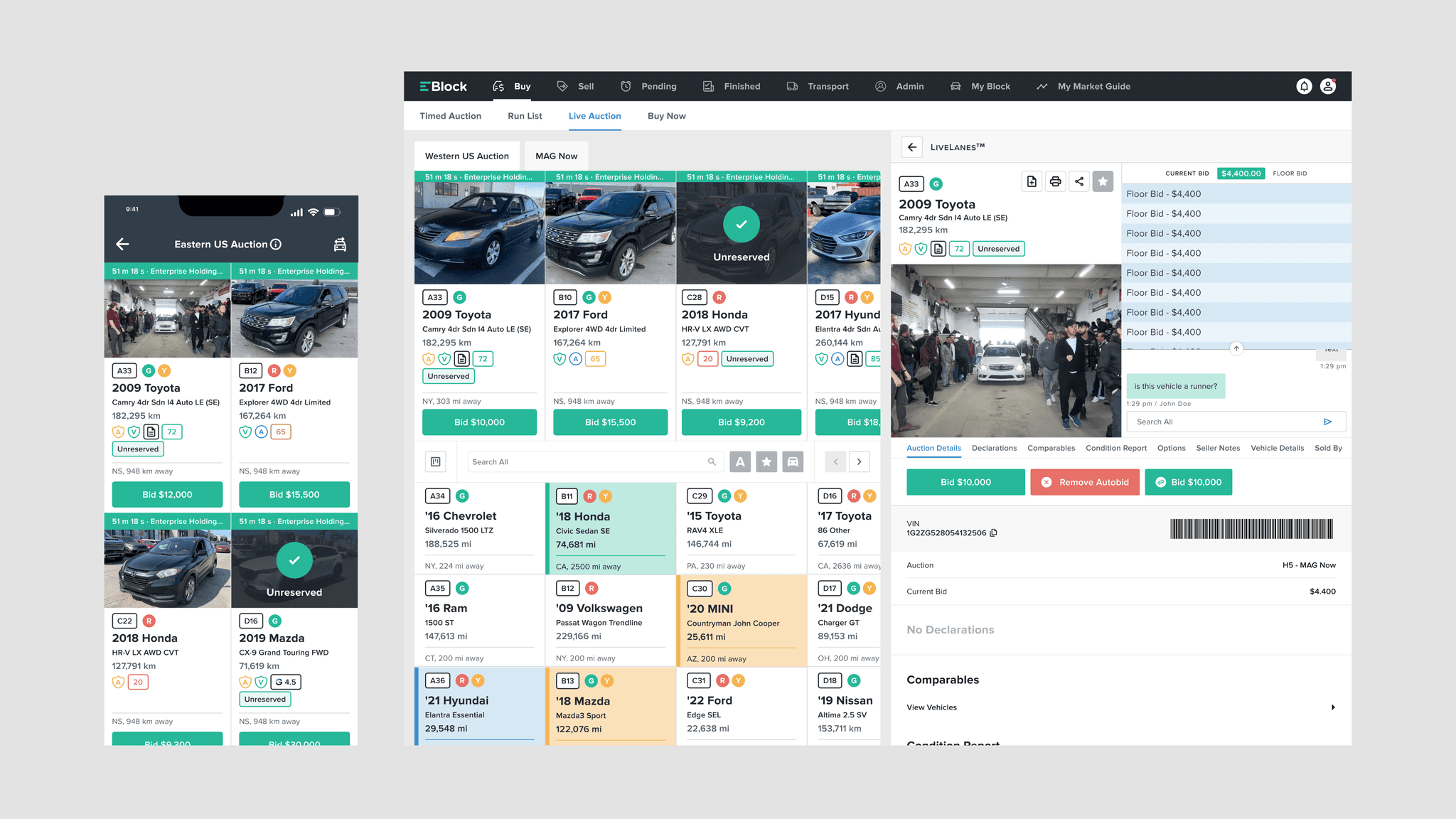
Example of our Live Auction template for web and mobile.