Project Type
Product Design
Role
Lead Designer
Skills
Figma, Prototyping, UX/UI
Redesigning EBlock's
Live Auction: Optimizing Multi-Lane Vehicle Exposure
Project Overview
EBlock's live auctions operate through multiple virtual lanes running simultaneously, with regions hosting 8-10 lanes each containing 20+ vehicles. The existing interface created a visibility inequity problem that impacted both buyer discovery and seller success.
The Problem
Business Context
EBlock's live auctions can run 10+ simultaneous lanes per region, but the interface only displayed 4 lanes without scrolling, creating significant visibility challenges.
The Visibility Inequity Issue
Primary lanes (first 4 visible) received consistent bidding activity
Secondary lanes (requiring scrolling to access) showed dramatically lower engagement
Vehicle Detail Page (VDP) was essential for buyer decisions but consumed significant screen space when open
Impact on Stakeholders
Sellers
Vehicles in less visible lanes received fewer bids, reducing sale success
Buyers
Limited discovery of inventory across all available lanes
Business
Reduced transaction volume due to poor inventory exposure
Project Constraints
Working within typical resource limitations:
No budget for user research due to development timeline pressures
Legacy interface dependencies requiring careful migration planning
Live auction criticality: any changes couldn't disrupt active bidding processes
Given these constraints, I focused on interface optimization principles and competitive auction platform analysis.
Strategic Approach
Auction Platform Analysis
I researched digital auction interfaces across industries to understand established patterns for multi-stream content management, identifying successful approaches to simultaneous content visibility.
Core Design Principles
Equitable Exposure
Ensure all vehicles have fair opportunity for buyer attention
Cognitive Load Management
Reduce decision fatigue when managing multiple information streams
Workflow Preservation
Maintain familiar interaction patterns while improving efficiency
Design Solution
Flexible Layout System
Two Layout Options:
Grid Layout: Maximizes vehicle visibility across lanes
Column Layout: Preserves familiar interface for conservative users
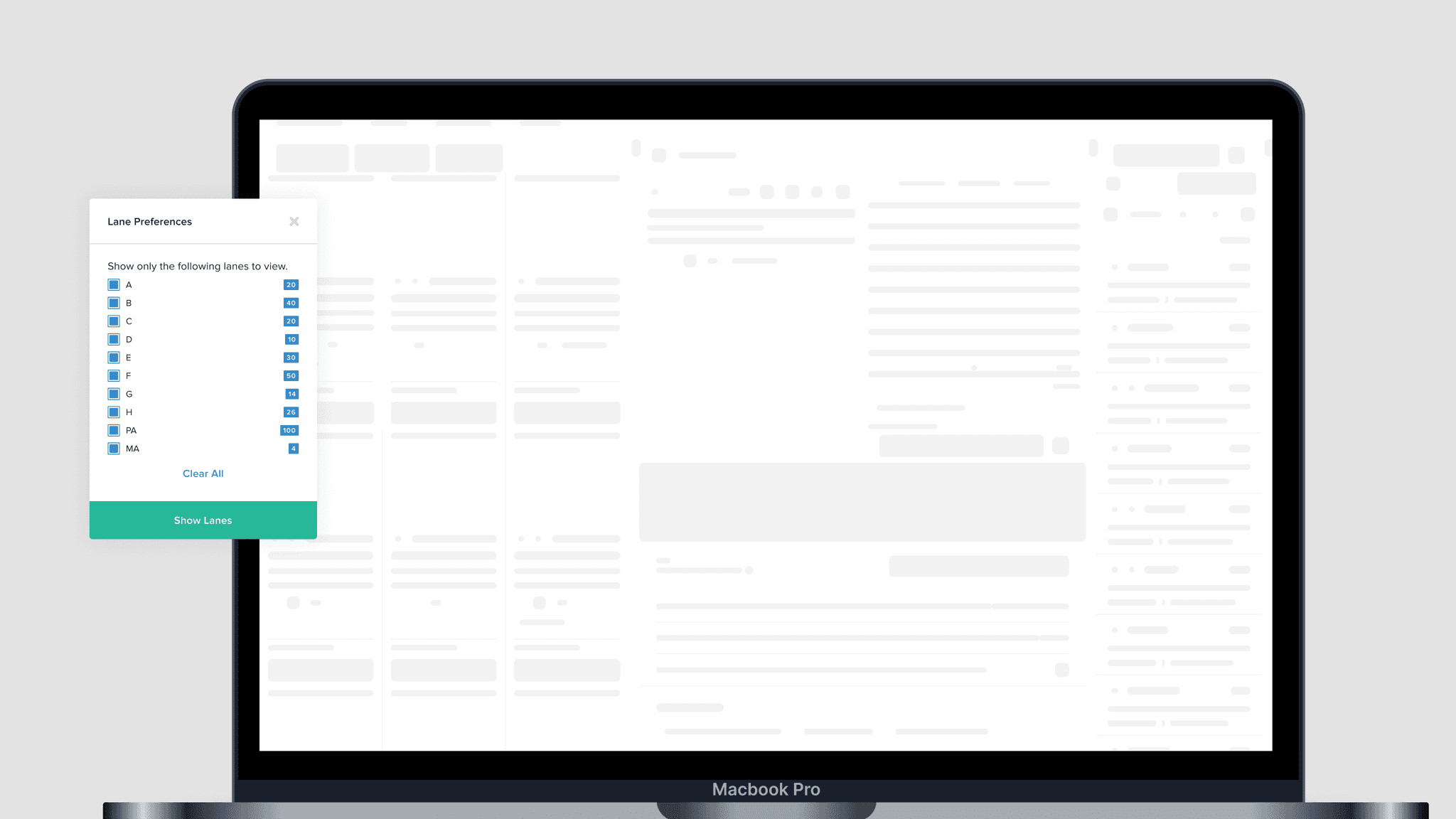
Lane Selection Controls: Users can focus on specific lanes, reducing cognitive overhead while maintaining access to all inventory.
Information Architecture Redesign
Before: Fixed 4-lane display with VDP competing for space
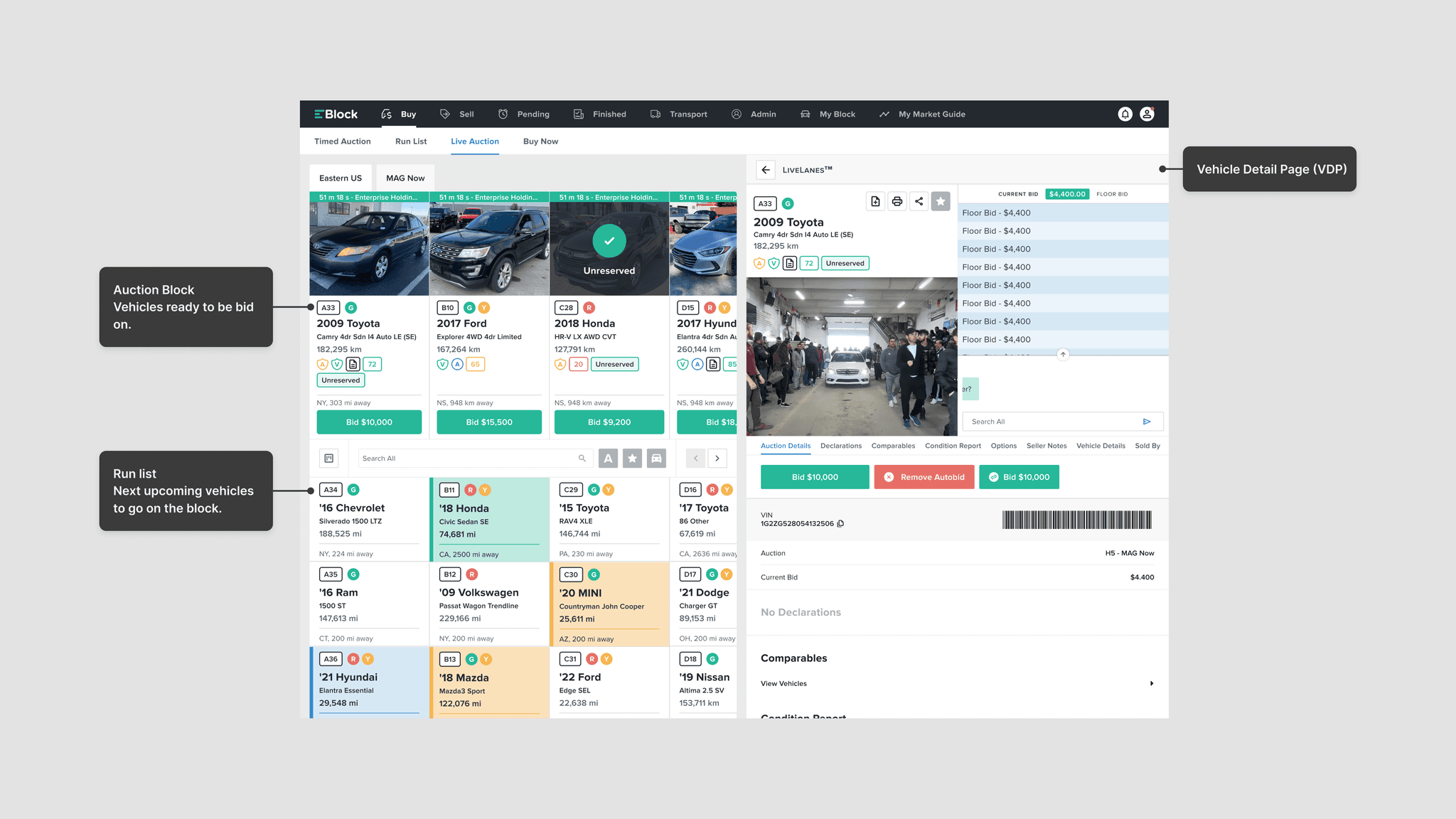
After: Dynamic 6+ vehicle display with optimized VDP integration
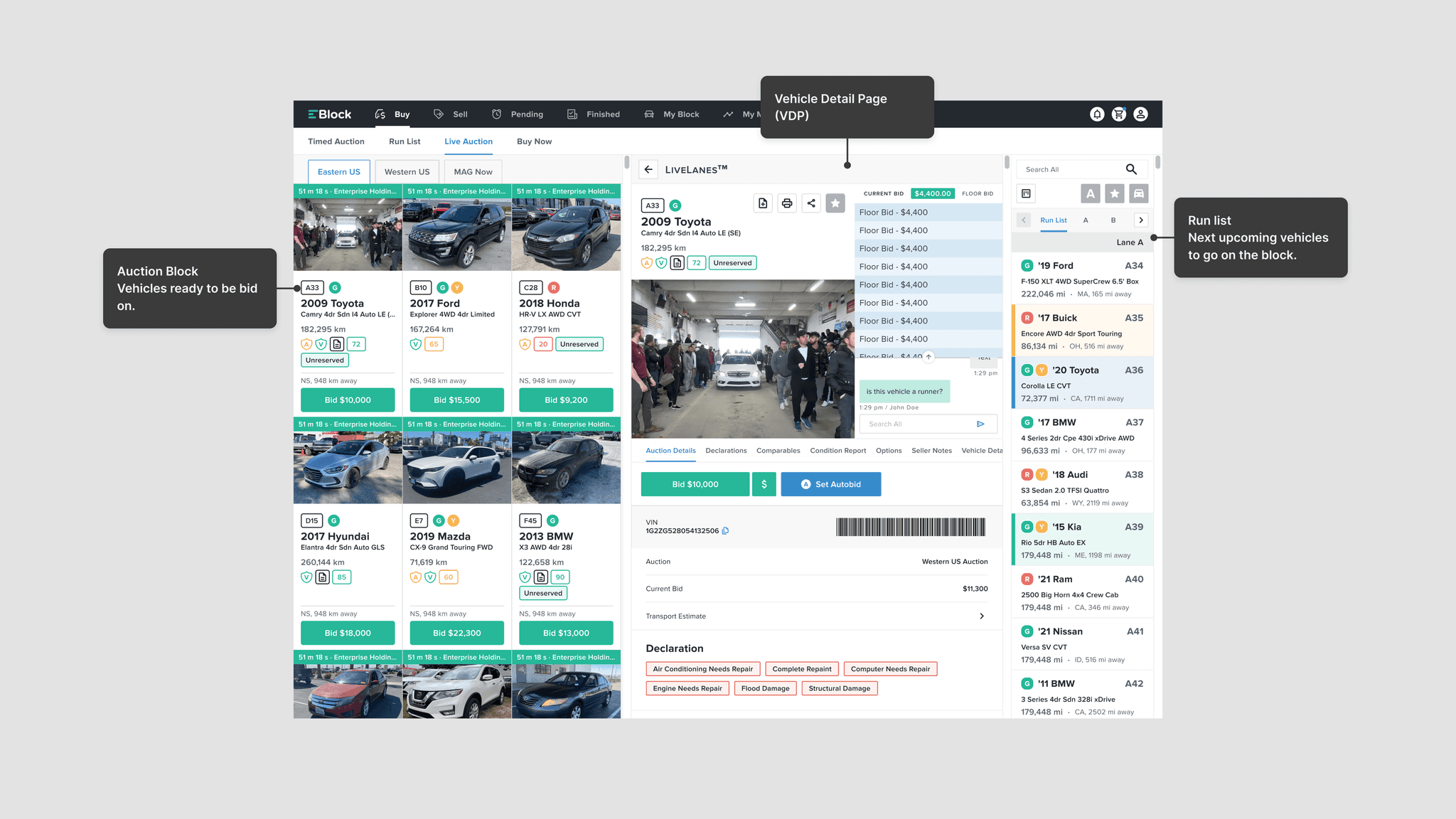
Repositioned run list to allocate more space for active vehicles
Centralized VDP placement reducing navigation distance between sections
Responsive vehicle cards that adjust width based on selected lanes
Enhanced Focus Management
Lane Tabs: Enable users to focus on specific upcoming vehicles without losing awareness of other active lanes
Horizontal Scrolling Optimization: Limited to run list navigation, reducing complex scroll interactions
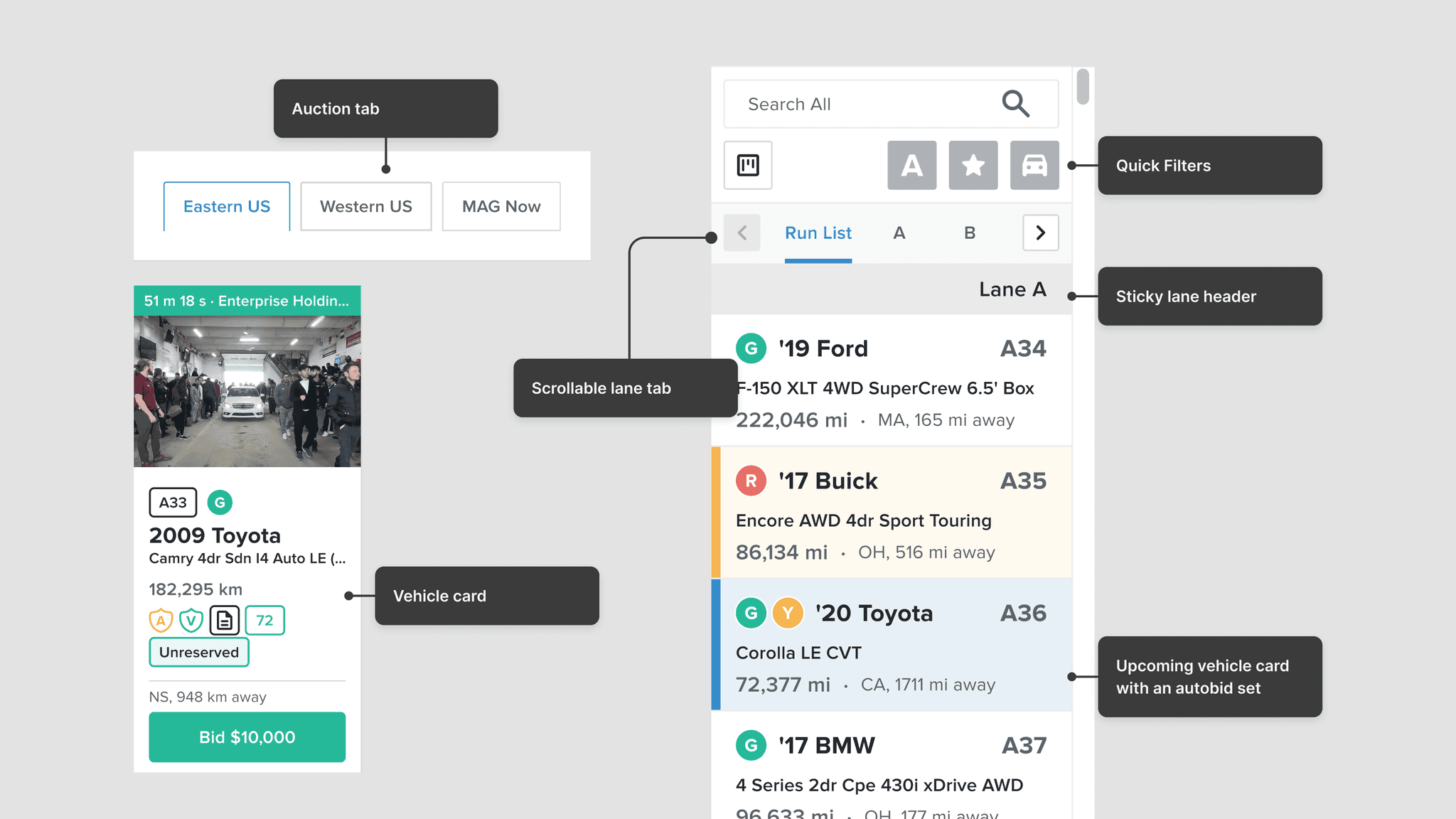
Examples of a few interactive components.
Implementation Strategy
Progressive Enhancement Approach
Web-first optimization (mobile already performed well)
Backward compatibility with existing user workflows
A/B capability through dual layout options
Visual Hierarchy Improvements
Lightened background colors on upcoming vehicle cards to reduce visual competition
Enhanced card borders with thicker vertical lines for better visual separation
Consistent responsive behavior across different lane configurations
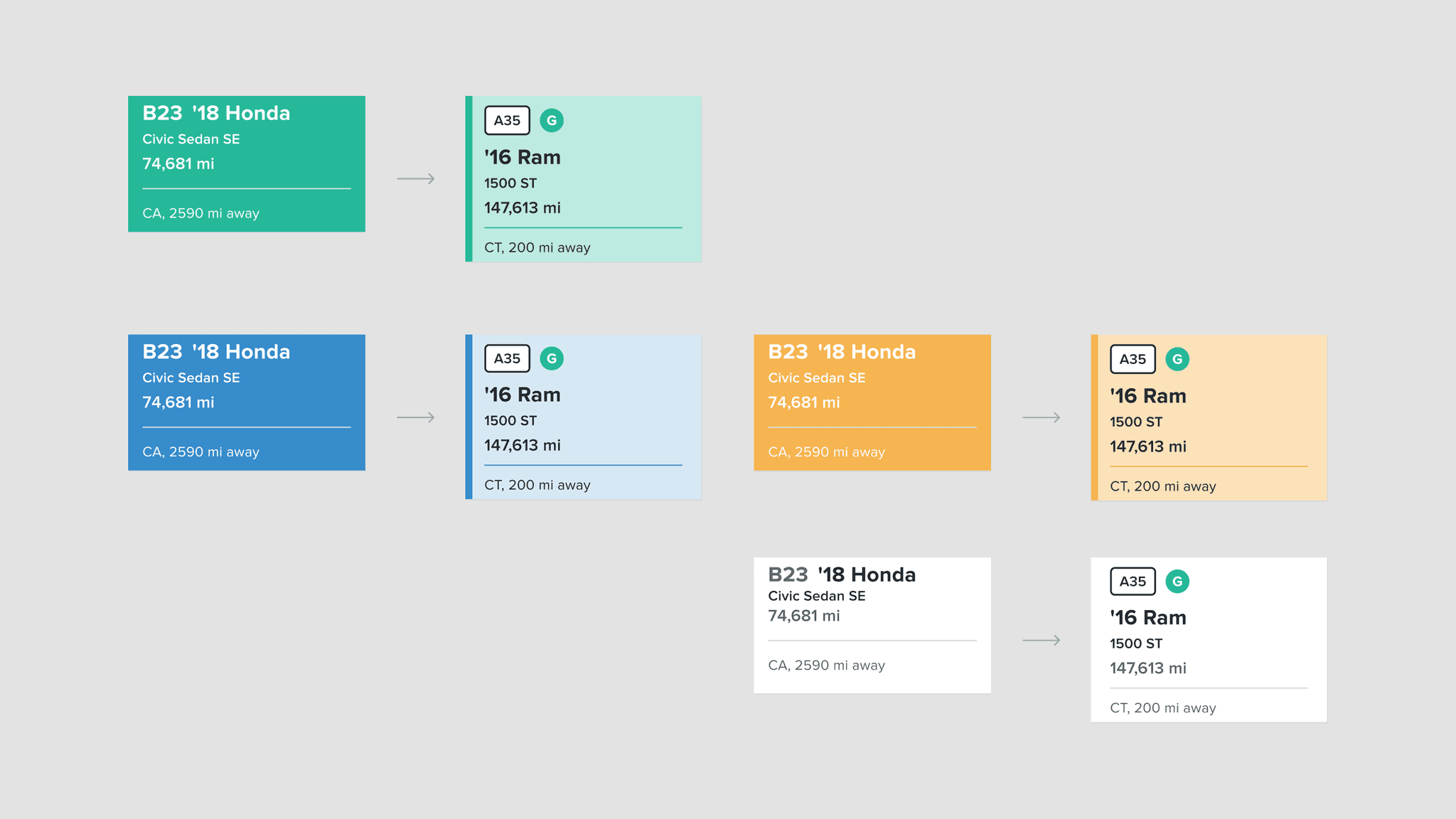
Example of UI updates in upcoming vehicle cards.
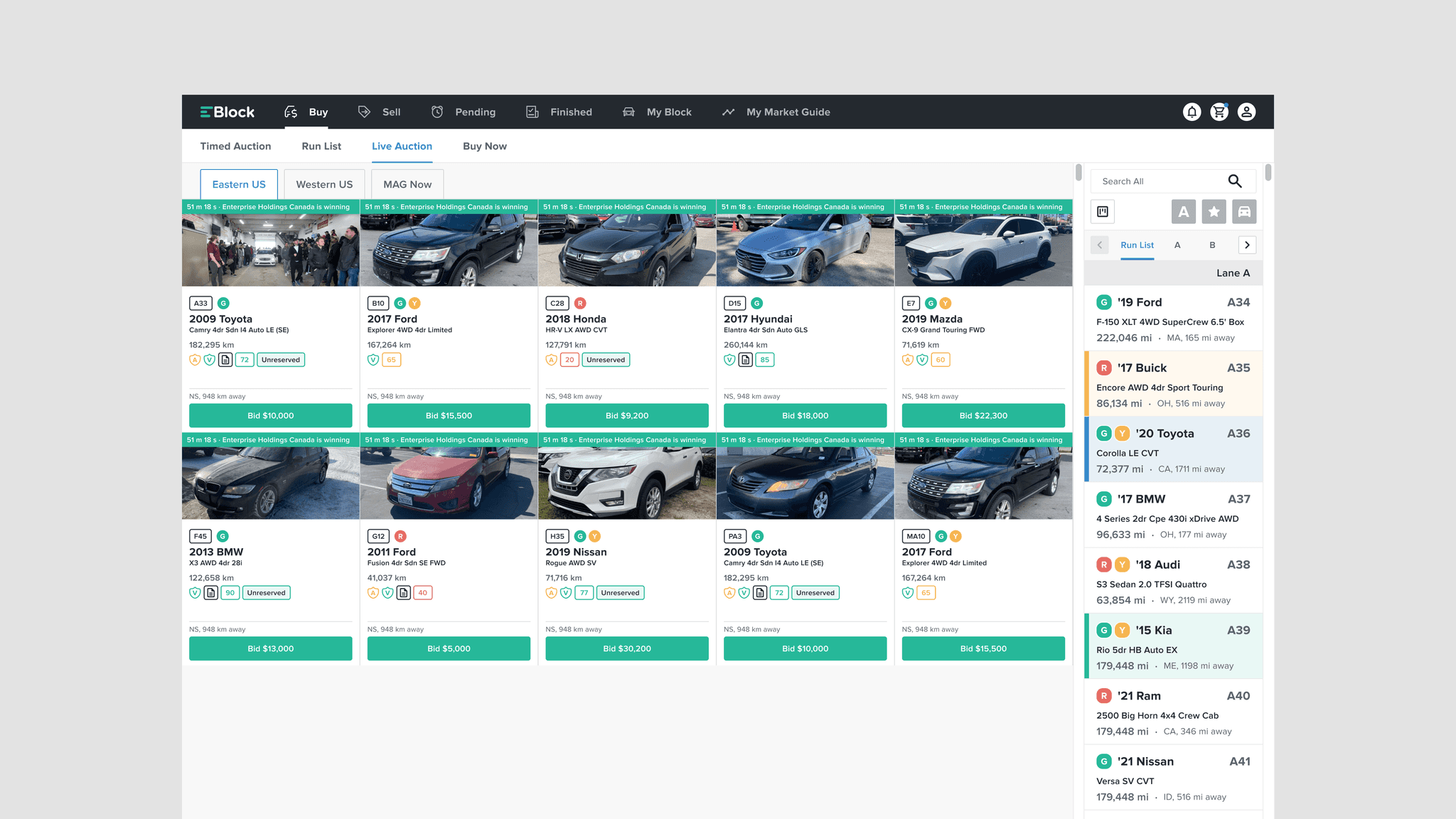
Example of the page with a closed VDP.
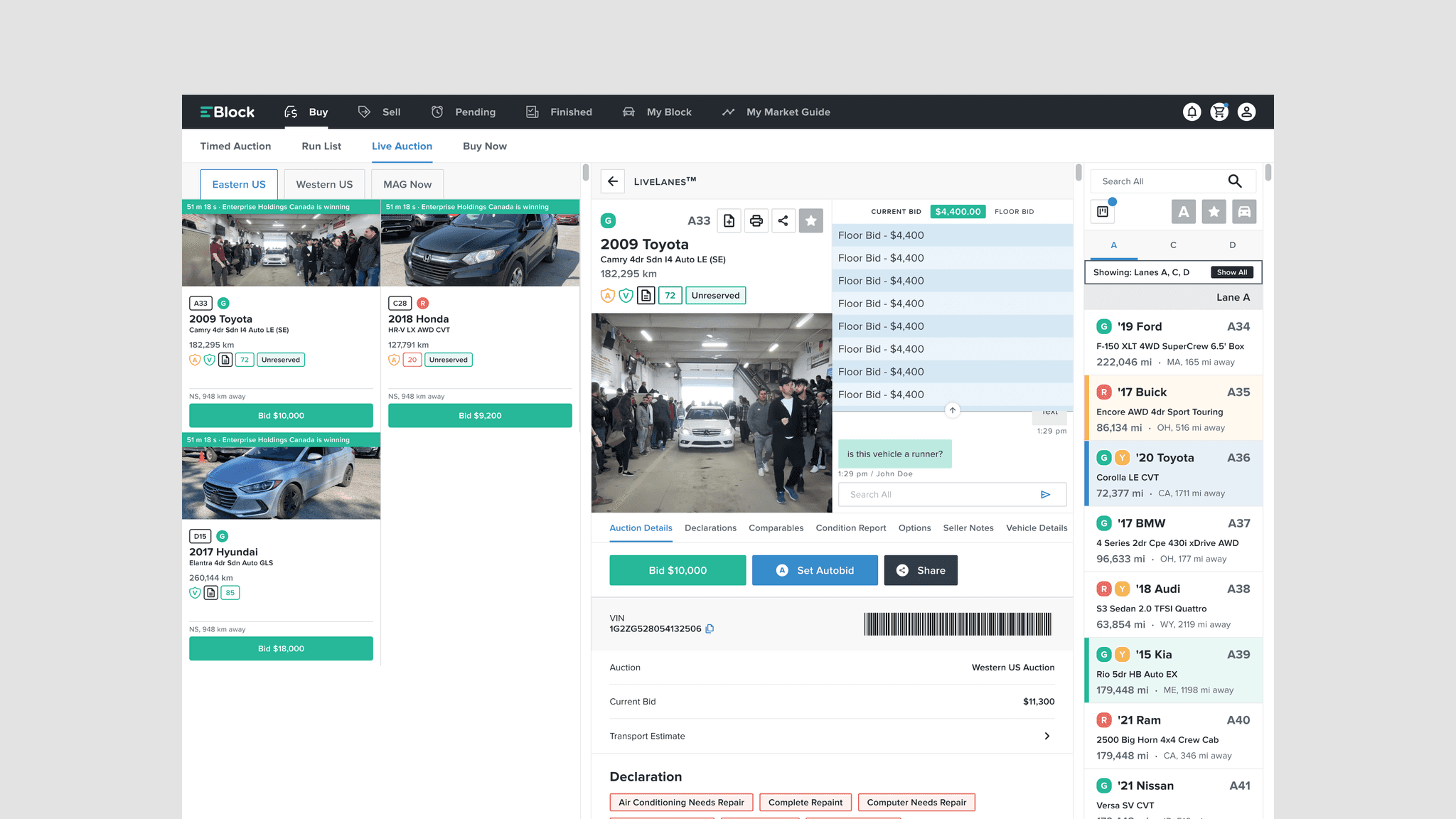
Example of the page with selected lanes showing.