Project Type
Product Design
Role
Sr. Product Designer
Skills
Figma, UX/UI, Branding, Design System
Chassis Design System: Building for Scalability
Project Overview
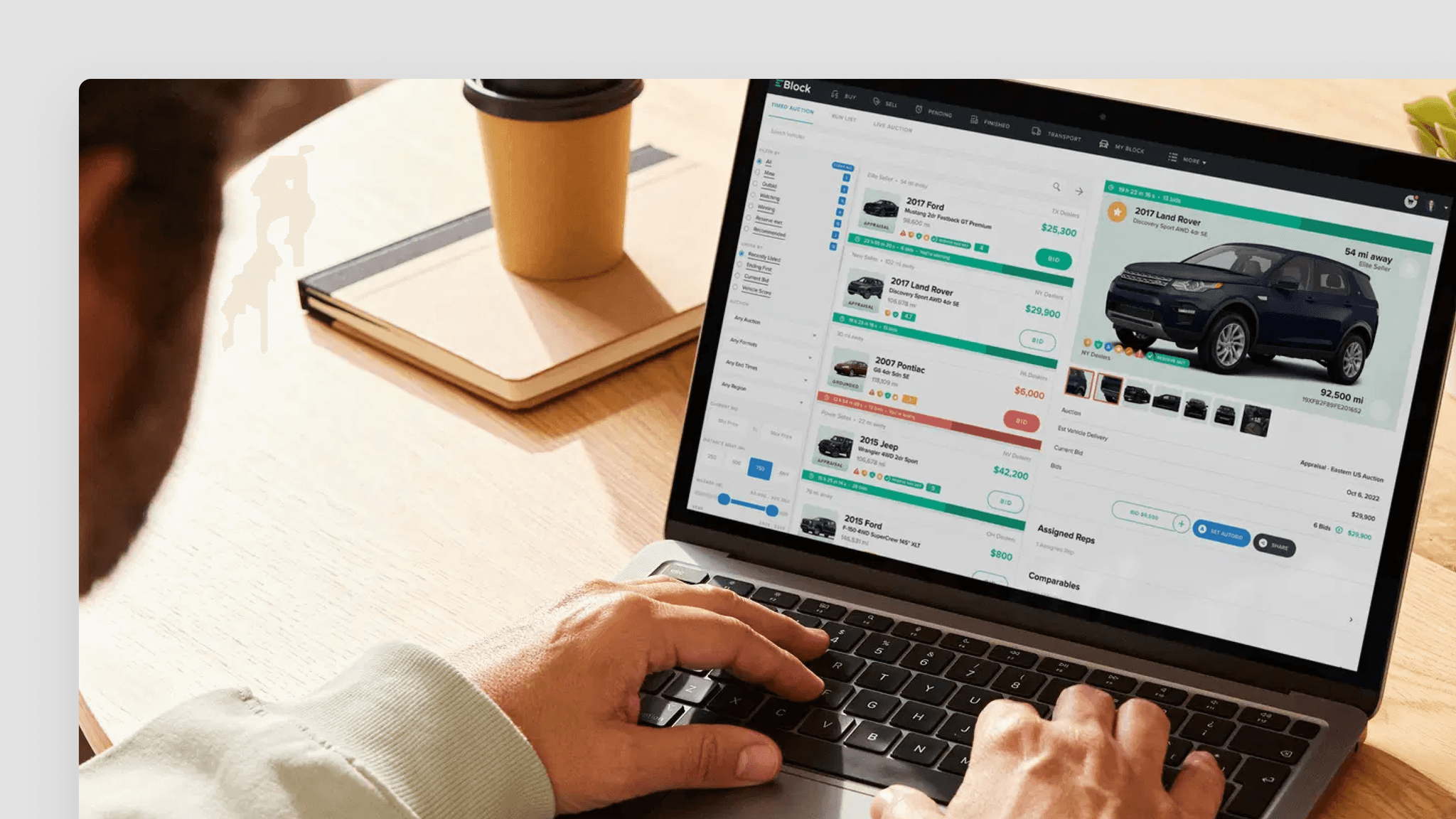
EBlock is an online dealer-to-dealer auction platform serving 15,000+ daily users. I led the development of the Chassis Design System, a comprehensive design framework to address critical inconsistencies threatening user experience and team productivity.
The Problem
EBlock's rapid growth created fragmented design with inconsistent UI patterns across the platform:
Inconsistent Navigation: Key auction features like bidding controls appeared differently across timed auctions, live auctions, and inventory browsing, forcing users to relearn interactions
Visual Fragmentation: Buttons, forms, and data displays used different styling without systematic logic, creating an unprofessional appearance that could undermine trust in high-value transactions
Development Inefficiency: Teams were rebuilding similar components repeatedly, leading to code bloat and maintenance challenges
Project Constraints
This project operated under significant limitations:
Maximized research impact with limited resources through competitive benchmarking, internal user feedback, and analytics review
Managed parallel workstreams, delivering design system components while supporting active feature development
Collaborated with engineering on graceful migration paths, enabling system updates without affecting live dealer operations
Design Strategy
Atomic Design Framework
We adopted an atomic design structure to ensure flexibility and scalability.
Atoms: Standardized color palette, typography scale, spacing system, and icon library
Molecules: 15+ core components with 3-10 variations each, all WCAG 2.1 AA compliant
Organisms: Complex components like vehicle cards and auction control panels
Conservative Rollout
To minimize risk, I employed gradual implementation:
Maintained familiar user flows while improving visual consistency
Updated components during natural feature cycles
Ensured old and new patterns could coexist during transition
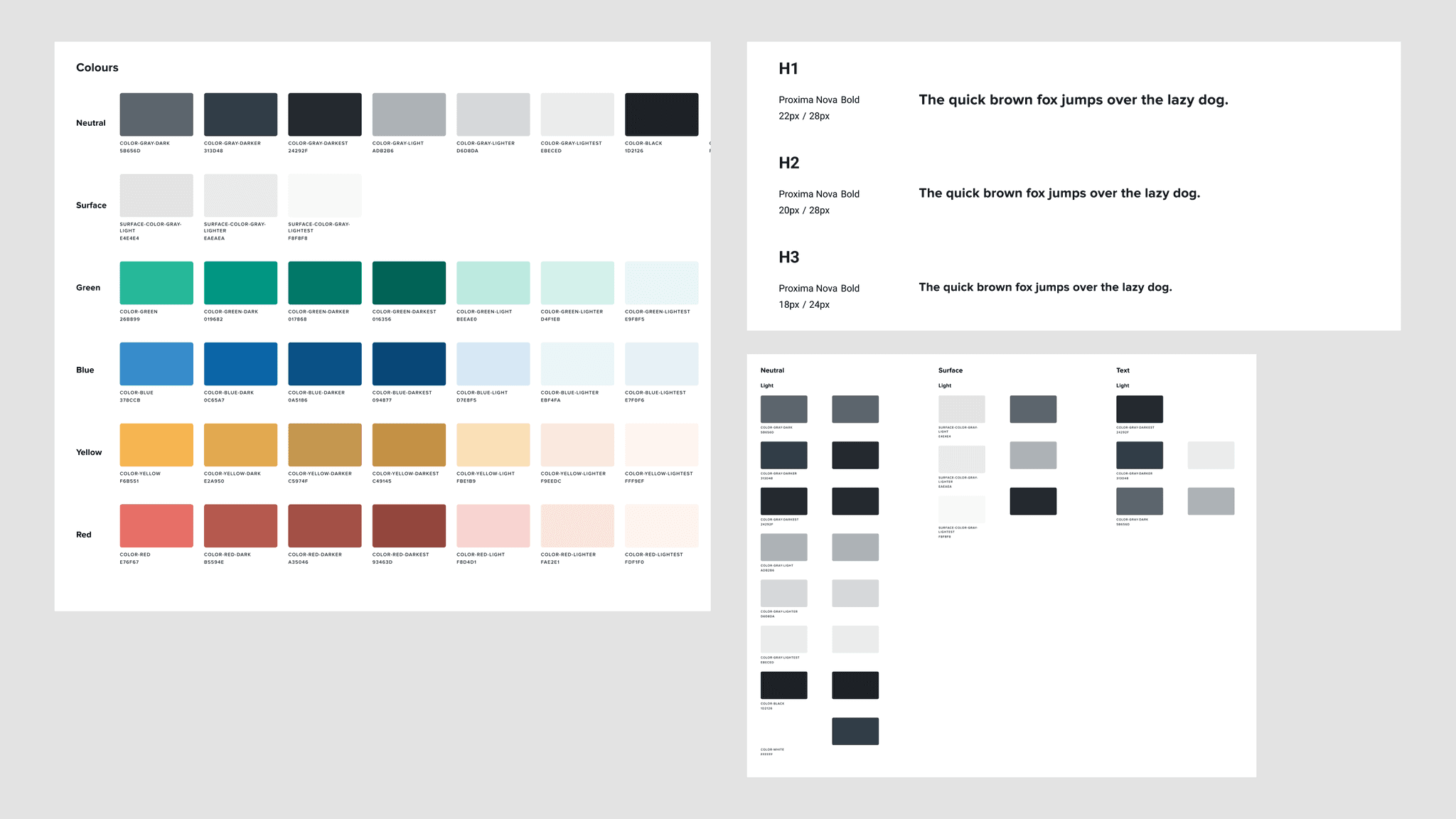
Examples of our color palette (including light and dark mode) and typography.
Process
Audit & Documentation
Catalogued existing patterns across 50+ screens, identifying 8 different button styles serving similar functions
Stakeholder Alignment
Conducted workshops with developers and established governance process for system evolution
Component Development
Created a comprehensive Figma library with detailed specifications and developer handoff annotations
Template Creation
Developed high-fidelity templates for critical pages, including timed auctions, live auctions, and run list

Examples of components from the design kit.
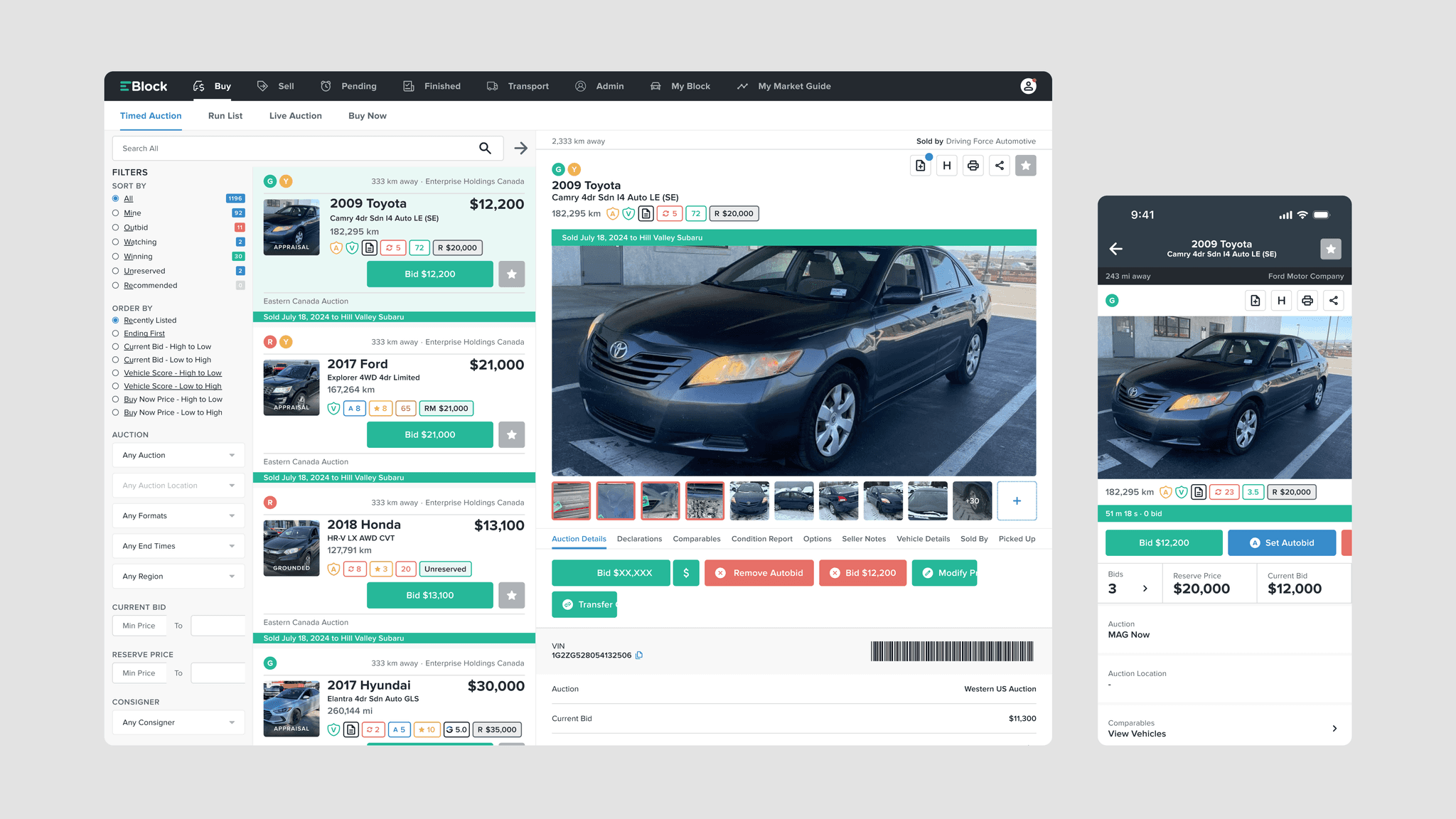
Example of our Timed Auction template for web and mobile.
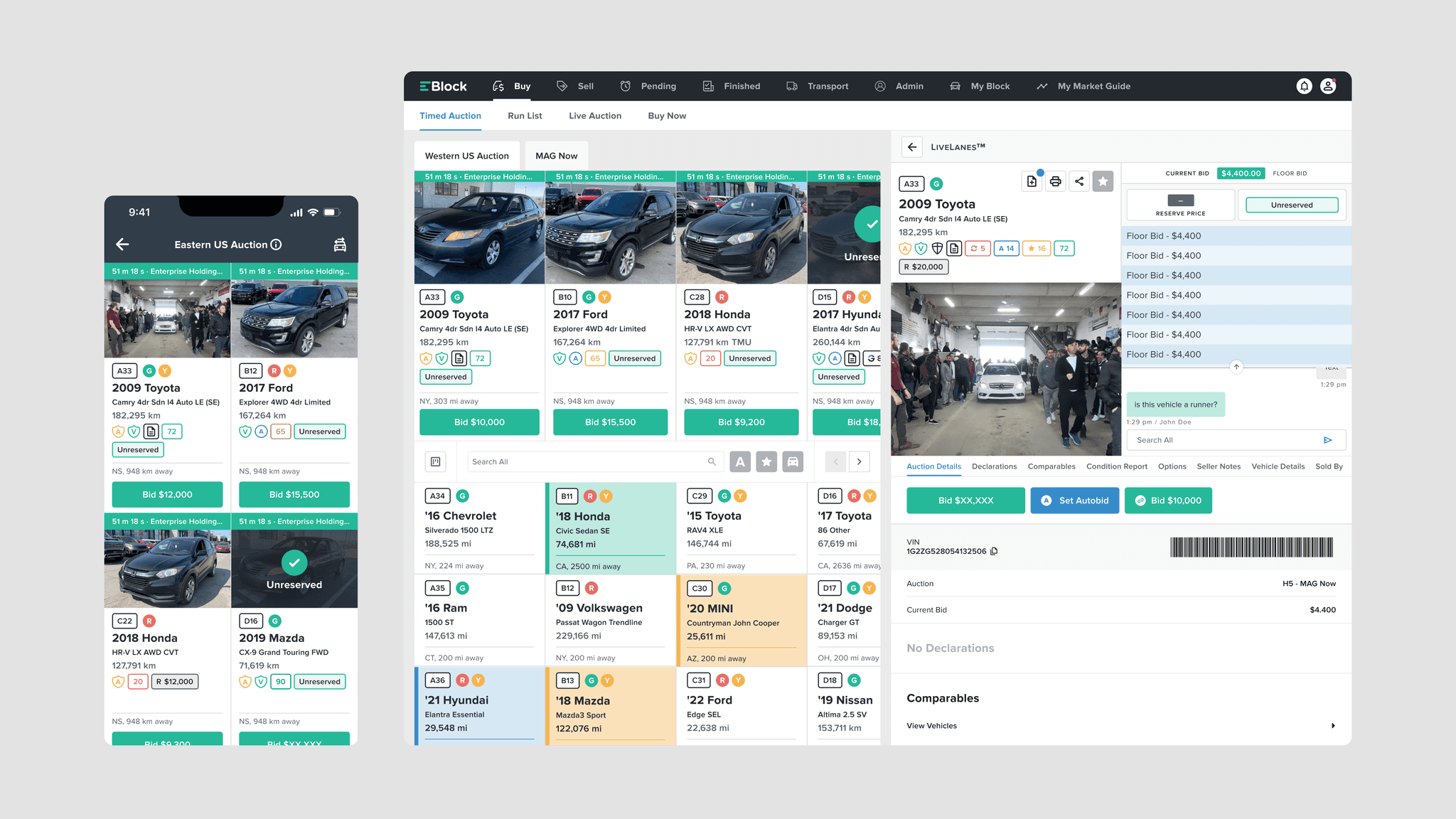
Example of our Live Auction template for web and mobile.